

ALSÉOUPOLI : Plato Drakoulis’ Ecological Proposal for the Place of Residence
- George Bousoutas Thanasoulas
- Apr 19
- 5 min read
Updated: Apr 20
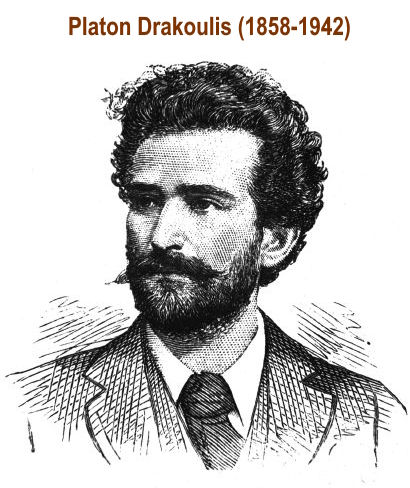
Images from the Middle East flood the news every day. Television screens, radio bulletins, and newspaper front pages inform us about destroyed cities, human losses, and societies in crisis. Beyond the immediate human cost, however, modern wars leave deep marks on the environment as well, placing further strain on an already fragile planet. The consequences of contemporary conflicts are not limited to human tragedy; they also expose structural weaknesses in the way modern societies and cities are organized. Within this context, alternative proposals for organizing space and life gain particular importance. One such proposal comes from a nearly forgotten Greek thinker and Freemason, Plato Drakoulis, a member of the Pythagoras Lodge of the Grand Lodge of Greece since 1883. His proposal for “Alséoupoleis” aims at a more resilient and balanced relationship between human beings, society, and nature. He formulated it at the beginning of the previous century, at a time when ecological concerns and natural ways of living were not yet part of public discourse.
His ideas appear even more relevant today, given the conditions shaped by war, the economic forces behind it, and the concentration of large populations in cities. The clustering of industrial units in specific areas and populations in urban centers makes them easy targets for attacks, while their destruction further worsens ecological conditions on the planet—and consequently for humanity itself. Plato Drakoulis was born in Ithaca and was one of the pioneers of the Greek socialist movement. Of aristocratic origin, he came to Athens to study and became actively involved in politics and the promotion of socialism. He approached socialism through a humanitarian–Christian perspective, which gradually came to dominate his thinking, especially after his first stay in Britain. A journalist, translator, and author, he was elected professor of Greek at the University of Oxford. He published the newspaper Ardin, the journal Erevna (Research), and a significant number of books presenting his political views. He participated in the Second Socialist International and was also familiar with the founding of the Humanitarian League in London by individuals associated with the Theosophical Society. For a long time, he was considered the “messiah” of the Greek socialist movement. After an unsuccessful parliamentary candidacy in 1895, he was elected in 1912 and supported the domestic and foreign policy of Prime Minister Eleftherios Venizelos (1864–1936). His political trajectory, however, eventually fell into disfavour among younger Marxist - socialists.
Particular interest lies in Drakoulis’ later thought, influenced by Freemasonry, the Theosophical Society, and the Humanitarian League. He combined socialism with a lifestyle friendly to nature and animals, advocating a fruit-based diet and a significant role for women. In doing so, he transformed socialism from a purely material and social improvement of workers into a broader vision encompassing the spiritual and psychological development of human beings. The pinnacle of his proposal was the Alséoupolis: a settlement model where urban and rural life coexist.
This idea was not isolated from European currents of the time. It was closely linked to the work of urban planner Sir Ebenezer Howard (1850–1928), who developed the concept of “garden cities,” proposing a more balanced relationship between humans and the environment. For Drakoulis, the transition to this model would not occur through violent upheaval but through a “peaceful revolution.” The coexistence of agriculture and industry, the decentralization of production, and the strengthening of the human relationship with the land were central pillars of his proposal. He believed that land ownership by residents and the gradual relocation of activities outside urban centers could reduce overcrowding and improve quality of life.
1 A compound word from the words grove and city
In 1901, Drakoulis published the journal Research in London. In the December 1902 issue, he
presented his proposal in a text titled “‘Alséoupoleis’: The combination of rural and urban life as a peaceful revolution.” References to this idea also appear in his other writings. About a year earlier in the same magazine, in an article titled “On Contemporary Civilization,” he identified the chaotic state of modern civilization as stemming from the opposition between agriculture and industry. As a solution, he proposed cooperation between these “two nourishers of humanity” through reconciliation of urban and rural life.
Such reconciliation, he argued, would ensure health, wealth, freedom, and peace. A life more in harmony with nature would restore strength, virtue, intelligence, and inspiration—qualities that life in large cities tends to destroy. For Drakoulis, the problem had three interconnected aspects: overcrowding in large cities, abandonment of the countryside, and inadequate land ownership laws. Solving them required simultaneous action — identifying the causes of urban overcrowding, reversing rural depopulation, and ensuring legal guarantees for agricultural security. He believed that humanity, since the time of Plato, has sought to improve life by transforming social conditions and utilizing scientific discoveries. While innovations such as steam power improved living conditions, they also led to exploitation by political and financial interests. As a remedy, he proposed a new industrial system that would allow the productive forces of nature and society to be used optimally, with fair distribution of output.
Regarding who deserves this output, he noted two philosophical schools: individualists and collectivists. However, he proposed a third path—combining self-reliance with social cooperation—and advocating peaceful reform. He referred to the founding of the Bionomic Society in London, which recognized the union of agriculture and industry as its first principle. Its goal was to build Alséoupoleis that would combine the advantages of urban and rural life while eliminating their drawbacks.
The reasoning was that large cities exert a strong attraction, leading to overcrowding, poor
living conditions, and insecurity. This attraction could only be countered by creating a new pole—offering the benefits of cities without their disadvantages. This new space would be socially owned, established on agricultural land, and enhanced through science without losing its rural character. The project required time, resources, and sustained commitment. Drakoulis saw it as a “remedy” for urban overcrowding and rural decline. Past failures served as lessons, while new developments—such as the relocation of factories outside cities—supported the idea. He cited examples like the Cadbury factory in Bournville and Lever Brothers in Port Sunlight, influenced by similar principles.
Drakoulis challenged the assumption that factories must be located within cities. Industry, he argued, could function alongside agricultural activities in new settlements. Residents could be
encouraged to move by offering them ownership of land through long-term payment schemes. Land ownership would both attract people and improve living conditions. As he wrote: “The Alséoupolis will unite the two elements, the male and the female—that is, the grove and the city. The countryside inspires; the city achieves. Their union produces a healthy human life, while their separation is unnatural.”
His ideas have been described as vague, utopian, idealistic, or humanitarian. He attempted to
implement them during the resettlement of Asia Minor refugees after the Greek defeat and population exchange with Turkey. Objectively, many aspects of his proposal are difficult to implement. Nevertheless, history partly vindicated him, as industries gradually moved away from urban centers. However, urbanization continued, particularly in Greece, due to agricultural policies that failed to support rural areas. Today’s discussions on sustainable development, smart cities, and the return to rural life show that his central question remains open. In an era of climate crisis, war, and population concentration,
Drakoulis’ vision gains renewed relevance. His advocacy of a plant-based diet, reducing aggression and promoting peaceful coexistence, adds another dimension to his thought. Ultimately, the issue may not be choosing between city and countryside, but finding a new balance between them. In this search, ideas once considered utopian may prove more realistic than ever.
It is indeed true that a life closely connected to the land would be more natural and of higher quality than urban life. Cities offer a sense of security through services and cultural opportunities, but stress, routine, and social relations often fail to match the quality of life in rural areas. This is why, in recent years, many urban residents have chosen to leave cities. Perhaps Drakoulis’ vision will one day take shape again in a new form.
George Bousoutas Thanasoulas


Comments